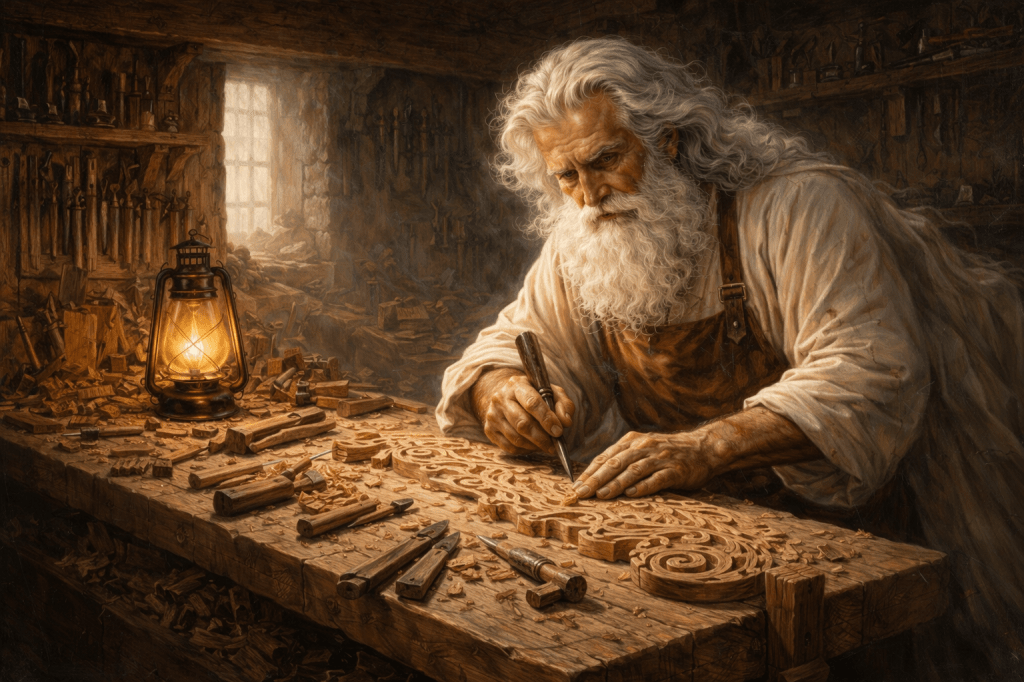
For we are His workmanship, created in Christ Jesus for good works, which God prepared beforehand that we should walk in them. (Ephesians 2:10)
Did you know where our word for “workmanship” comes from? The Greek word poiēma (ποίημα) translated as “workmanship” is also one of the sources for our word “poem.”
Poiēma is derived from the Greek verb poiéō (ποιέω), which means “to make,” “to do,” “to create,” or “to bring into existence.”
When you take a moment to think about this background, it adds a whole new layer to this verse.
When Paul described us as God’s workmanship, it carries with it a sense of artwork, artistry, of fine craftsmanship, and intentional design. It also explains our individual uniqueness. Therefore, at its most basic level, poiēma refers to something that has been made or created. However, the context and usage in Ephesians 2:10 elevates this simple definition.
The universe is God’s poiēma.
You and I are not accidental but intentional creations, like a work of art or poetry (poiēma).
God’s plan and purpose for individuals can even predate their birth, as seen in Jeremiah:
“Before I formed you in the womb I knew you; before you were born I sanctified you; I ordained you a prophet to the nations.” (Jeremiah 1:5)
In essence, the Bible presents believers as God’s special creation, designed and empowered to fulfill His specific, good purposes in the world, a testament to His grace and artistry.
Rejoice today in the realization that you were created with a design and a purpose – your are God’s poem.
This post was inspired by a chapter in
“The Joshua Code, a 52-Week Devotional” on Ephesians 2:8.
 Dead Man Walking
Leave a comment