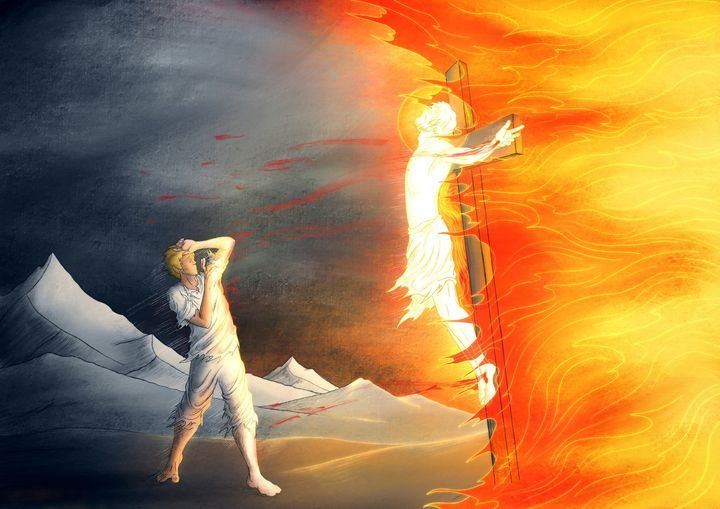
He Himself is the propitiation for our sins, and not for ours only but also for the whole world. (1 John 2:2)
Propitiation and Remission of Sins
These are two heavyweight words that don’t get used very often in everyday speech. Many “big” words have come to lose meaning in today’s culture that wants to simplify everything. But the rich meaning is lost when translated into “easy” English. That doesn’t mean we will use these words when witnessing to others, but they are important concepts that are necessary for our growth as disciples of Christ.
PROPITIATION:
The word propitiation carries the basic idea of appeasement or satisfaction, specifically toward God. Propitiation is a two-part act that involves
(1) appeasing the wrath of an offended person and
(2) being reconciled to him.
So one word carried the whole concept of the gospel. Christ died for our sins, appeasing the wrath we deserve from God, and also reconciled us to Him.
REMISSION OF SINS:
To remit is to forgive. Remission is a related word, and it means “forgiveness.” The “remission of sin,” then, is simply the “forgiveness” of sin. The phrase is used in eight places in the King James Version of the Bible.
We typically hear the word “remission” when it comes to cancer – someone can have their cancer go into remission. Cancer remission is when the signs and symptoms of cancer have lessened or are undetectable.
Being in remission is not the same as being cancer free. Remission is not a cure, and it doesn’t mean that you’re totally cancer free. Even in complete remission, there can still be some cancer cells in your body, and these can start growing again.
When we accept Christ’s death for our sins (Propitiation), our sins are forgiven (Remission). Does that mean we are free of sin? Not as long as we live in these sinful bodies on this sinful planet. We still have a sin nature, and we battle sin daily. But while we are sinners, we are not condemned -the propitiation of Christ has paid the price for our sins and reconciled us with God.
“…at the right time Christ died for the ungodly. For one will scarcely die for a righteous person—though perhaps for a good person one would dare even to die— but God shows his love for us in that while we were still sinners, Christ died for us. Since, therefore, we have now been justified by his blood, much more shall we be saved by him from the wrath of God. For if while we were enemies we were reconciled to God by the death of his Son, much more, now that we are reconciled, shall we be saved by his life.” (Romans 5:6-10)
The whole idea of this should drive us to our knees daily. That the Creator of the world cared so much about us that He would take such a drastic step for the sole purpose of making sure there is a way for us to be with Him for eternity.
Definitions are from articles at gotquestions.org
 Dead Man Walking
Leave a comment